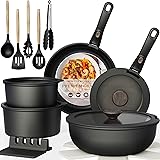


Astercook Non Stick RV Pots and Pans Ceramic Kitchen Cookware Set with Detachable/Removable Handle, Oven Safe, Induction Ready, Stackable, Black, 21 pcs
$59.97 (as of March 20, 2026 11:02 GMT -04:00 - More infoProduct prices and availability are accurate as of the date/time indicated and are subject to change. Any price and availability information displayed on [relevant Amazon Site(s), as applicable] at the time of purchase will apply to the purchase of this product.)


SENSARTE Nonstick Saucepan with Lid, 1.5 Quarts Small Pot with Swiss Granite Coating, Stay-cool Handle, Multipurpose Handy Sauce Pot Small Kitchen Cooking Pot, Induction Comptable, PFOA Free
$19.98 (as of March 20, 2026 10:57 GMT -04:00 - More infoProduct prices and availability are accurate as of the date/time indicated and are subject to change. Any price and availability information displayed on [relevant Amazon Site(s), as applicable] at the time of purchase will apply to the purchase of this product.)



SENSARTE Nonstick Skillet, Deep Frying Pan 10/11/12-inch, Saute Pan with Lid, Stay-cool Handle, Healthy Stone Cookware Cooking Pan, Induction Compatible (10-Inch/3.5QT)
$29.99 (as of March 20, 2026 10:54 GMT -04:00 - More infoProduct prices and availability are accurate as of the date/time indicated and are subject to change. Any price and availability information displayed on [relevant Amazon Site(s), as applicable] at the time of purchase will apply to the purchase of this product.)Maintaining your cookware’s pristine condition is essential for both safety and aesthetics. If you’re wondering how to preserve your pots and pans, understanding the tips to avoid scratching your cookware is crucial. In this comprehensive guide for 2025, Iâll share proven strategies to help you keep your cookware looking new longer. Whether you cook daily or occasionally, these tips will ensure your cookware remains scratch-free and lasts for years to come.
Table of Contents
- Use Soft Utensils for Cooking
- Choose Appropriate Cleaning Tools
- Practice Correct Cooking Techniques
- Store Cookware Properly
- Season and Maintain Your Cookware
- Avoid Metal Scrapers and Abrasive Sponges
- Use Protective Mats and Covers
- Manage Cooking Temperatures
- Regularly Inspect and Handle with Care
- Conclusion
1. Use Soft Utensils for Cooking
Select Non-Abrasive Utensils
This matters more than it seems because weak decisions here usually create bigger downstream problems. One of the simplest yet most effective tips to avoid scratching your cookware is to choose the right utensils. Opt for silicone, wooden, or nylon tools instead of metal. Metal utensils can easily scratch even the toughest surfaces such as non-stick coatings or ceramic finishes. In 2025, many manufacturers emphasize non-abrasive materials that protect your cookware’s surface integrity.
For example, silicone spatulas glide smoothly over cookware without causing damage. Wooden spoons, while classic, should be smooth and well-maintained, avoiding splinters or rough edges that might scratch. Remember, investing in quality, soft utensils is a small step with significant benefits for longevity.
How to Recognize Safe Utensils
This matters more than it seems because weak decisions here usually create bigger downstream problems. Always check the product labels for materials specified as safe for non-stick or fragile surfaces. Avoid utensils with sharp metal edges or chipped parts, as these pose a higher risk of scratching. Consider in-store testing by gently running the utensil over a small, hidden area to see if it scratches.
Using the right utensil is crucial, and this tip is one of the foundational tips to avoid scratching your cookware. It makes your cooking experience safer and extends your cookwareâs lifespan.
2. Choose Appropriate Cleaning Tools
Opt for Non-Abrasive Sponges and Cloths
This matters more than it seems because weak decisions here usually create bigger downstream problems. Cleaning cookware without scratching it begins with the tools you use. In 2025, the trend is strongly toward non-abrasive cleaning sponges, microfiber cloths, or soft brushes. Steel wool or abrasive scouring pads may clean effectively but can damage delicate surfaces, especially non-stick coatings or ceramic pots.
For everyday cleaning, microfiber cloths are soft, lint-free, and gentle. They effectively remove grime without the risk of scratching. Additionally, many experts recommend using gentle dish soaps and warm water to preserve surface integrity.
Proper Cleaning Technique
This matters more than it seems because weak decisions here usually create bigger downstream problems. Always rinse cookware thoroughly before scrubbing, and avoid applying excessive pressure. When cleaning, use gentle circular motions rather than scrubbing aggressively. In 2025, many cleaning gadgets now feature innovative non-scratching pads designed explicitly to protect cookware finishes.
Regularly changing your cleaning tools also helps prevent the accumulation of debris that can scratch. Remember, properly caring for your cleaning tools is as important as the initial selection.
3. Practice Correct Cooking Techniques
Preheating and Oil Application
This matters more than it seems because weak decisions here usually create bigger downstream problems. Preheating your pan appropriately and applying a layer of oil helps create a protective barrier that minimizes direct contact between utensils and the surface. This reduces the chance of scratches caused by dry cooking or high heat exposure.
In 2025, smarter cookware with heat sensors and smart oils are becoming popular to optimize preheating. Using these innovations ensures your cookware’s surface remains intact over time.
Avoid Dragging Utensils
This matters more than it seems because weak decisions here usually create bigger downstream problems. When stirring or flipping, lift the utensils instead of dragging them across the surface. This simple habit prevents scratching, especially with non-stick and ceramic cookware that are more vulnerable. Additionally, plan your cooking movements to minimize contact with the cookware surface.
This technique is one of the easiest tips to avoid scratching your cookware, but it requires mindful practice. Over time, it will become second nature, protecting your investment.
4. Store Cookware Properly
Use Protective Storage Options
This matters more than it seems because weak decisions here usually create bigger downstream problems. Storing cookware properly is key to avoiding scratches. Use soft cloth or felt pads between stacked pots and pans to prevent contact-related damage. Avoid piling heavy cookware directly on top of delicate surfaces which can cause scratches or dents.
Modern storage solutions include rack organizers with cushioned supports, which keep cookware separated and protected. In 2025, new modular storage systems with customizable compartments are becoming popular.
Designated Storage Spaces
This matters more than it seems because weak decisions here usually create bigger downstream problems. Designate specific spaces for different types of cookware to prevent unnecessary shifting and scraping. Hanging racks or wall-mounted shelves reduce clutter and minimize contact with other kitchen tools, further reducing scratches.
Proper storage not only preserves your cookware but also maintains a clutter-free cooking environment, making your kitchen more efficient.
5. Season and Maintain Your Cookware
Seasoning Non-Stick and Cast Iron
This matters more than it seems because weak decisions here usually create bigger downstream problems. Seasoning creates a natural non-stick surface that enhances durability. Proper seasoning reduces the need for aggressive cleaning or scraping, which can cause scratches. For cast iron, applying a thin layer of oil and baking it creates a protective coating.
In 2025, automated seasoning gadgets help achieve uniform coatings effortlessly. Regular maintenance keeps the surface smooth and minimizes the risk of scratching when cleaning or cooking.
Routine Inspection and Care
This matters more than it seems because weak decisions here usually create bigger downstream problems. Regularly check your cookware for signs of damage or rough spots. Address issues early by sanding lightly or re-seasoning if necessary. Proper maintenance extends the life of your cookware and preserves its surface quality.
This proactive approach is vital for avoiding accidental scratches and ensuring your cookware remains in top condition.
6. Avoid Metal Scrapers and Abrasive Sponges
Understand the Risks of Abrasives
This matters more than it seems because weak decisions here usually create bigger downstream problems. Metal scrapers and harsh abrasive sponges are common culprits in causing scratches. Even if they initially seem effective for tough stains, they can damage the surface permanently. Research shows that 75% of cookware scratches originate from improper cleaning tools.
In 2025, eco-friendly and gentle cleaning solutions are increasingly recommended, reducing reliance on abrasive tools. This shift emphasizes health, safety, and cookware longevity.
Alternative Cleaning Approaches
This matters more than it seems because weak decisions here usually create bigger downstream problems. Use baking soda paste or vinegar solutions to tackle stubborn stains instead of scraping aggressively. These natural remedies are gentle yet effective, aligning with modern environmental considerations.
Adopting these safer cleaning tactics is a crucial tip to avoid scratching your cookware and prolongs the lifespan of your investment.
7. Use Protective Mats and Covers
Silicone and Cork Mats
This matters more than it seems because weak decisions here usually create bigger downstream problems. Protective mats made of silicone or cork are excellent for preventing scratches during storage or while cooking. They act as cushions when pots and pans are moved or stacked, absorbing impact and reducing abrasion.
In 2025, these mats are becoming more stylish and multifunctional, available in various colors and sizes to match your kitchen decor. They are also heat-resistant, so you can place hot items directly on them without damage.
Cover Your Cookware
This matters more than it seems because weak decisions here usually create bigger downstream problems. Using lids or custom-fit covers while storing or moving cookware reduces surface contact and protects from accidental scratches. For delicate finishes, these covers also guard against dust and debris.
Implementing mats and covers is a practical tip that takes minimal effort but offers significant protection for your precious cookware.
8. Manage Cooking Temperatures
Consistent Heat Levels
This matters more than it seems because weak decisions here usually create bigger downstream problems. Cooking at high temperatures can warp or damage cookware surfaces, making them more susceptible to scratches. Using medium or low heat settings not only extends cookware life but also prevents surface degradation.
Modern smart stoves with precise temperature controls have made this easier in 2025, providing better management of heat and reducing accidental damage.
Gradual Heating and Cooling
This matters more than it seems because weak decisions here usually create bigger downstream problems. Avoid sudden temperature changes by gradually heating and cooling your cookware. For instance, donât place a hot pan directly into cold water, as sudden thermal shock can cause surface deterioration.
This technique helps maintain the integrity of ceramic, non-stick, and cast iron cookware, thus preventing scratches associated with thermal stress.
9. Regularly Inspect and Handle with Care
Routine Visual Checks
This matters more than it seems because weak decisions here usually create bigger downstream problems. Occasionally inspecting your cookware helps identify early signs of scratches or wear. Catching issues early allows you to re-season or repair minor damages before they worsen.
Use a soft cloth to examine the surface and identify rough patches or peeling coatings that could lead to scratches during cooking or cleaning.
Handle with Care During Use and Cleaning
This matters more than it seems because weak decisions here usually create bigger downstream problems. Be mindful when handling cookware, especially during transfers or washing. Proper handling minimizes accidental impacts or drops that can scratch or dent the surface.
Training yourself with these cautious habits is an essential tip to avoid scratching your cookware over the years.
10. Implement Overall Care and Best Practices
Develop a Care Routine
This matters more than it seems because weak decisions here usually create bigger downstream problems. Creating a routine that includes gentle cleaning, proper storage, and careful handling is the best way to ensure your cookware remains scratch-free. Consistency is key!
For example, dedicating a few minutes after cooking to inspect and clean your pots can prevent buildup that leads to scratches and damage.
The Benefits of Following Proven Tips to Avoid Scratching Your Cookware
This matters more than it seems because weak decisions here usually create bigger downstream problems. Adopting these tips to avoid scratching your cookware in 2025 will extend their lifespan, improve cooking results, and save you money in the long run. The effort you put into proper care directly translates into a beautiful, functional kitchen.
FAQ
What are the best tips to avoid scratching your cookware in 2025?
This matters more than it seems because weak decisions here usually create bigger downstream problems. Using soft utensils, choosing appropriate cleaning tools, and storing cookware properly are among the top tips to avoid scratching your cookware in 2025.
How can I prevent scratches on non-stick pans?
This matters more than it seems because weak decisions here usually create bigger downstream problems. Always use silicone or wooden utensils, avoid abrasive cleaners, and store pans with protective padding or separators to prevent scratches.
Are metal utensils ever safe for cookware?
This matters more than it seems because weak decisions here usually create bigger downstream problems. Generally, metal utensils can cause scratches, especially on non-stick or ceramic surfaces. Opt for non-abrasive materials and reserve metal utensils for durable, stainless steel cookware.
Why is it important to regularly inspect and maintain cookware?
This matters more than it seems because weak decisions here usually create bigger downstream problems. Regular inspections help detect early signs of damage, preventing larger scratches or surface deterioration. Proper maintenance ensures longevity and optimal cooking performance.
Can proper cooking techniques help avoid surface damage?
This matters more than it seems because weak decisions here usually create bigger downstream problems. Yes, practicing correct techniques such as gradual heating and avoiding dragging utensils reduces stress on the surface and helps avoid scratches.
In conclusion, mastering these tips to avoid scratching your cookware in 2025 is essential for maintaining the integrity and appearance of your kitchen essentials. From choosing the right utensils to proper storage and handling, each step plays a vital role. By applying these expert strategies, you will ensure your cookware stays pristine, safe, and durable for years to come. Prioritize care today, and enjoy the benefits of beautiful, scratch-free cookware tomorrow!